Top this week

most clinically relevant
Neuro / Head & NeckGuidelineTrainee

AJR Expert Panel Review: MRI Reporting for Suspected and Established iNPH

Suspected idiopathic normal pressure hydrocephalus: AJR expert panel recommends unenhanced MRI with 3D T1-weighted sequence; report ventriculomegaly, high-convexity narrowed sulci, enlarged Sylvian fissures (disproportionately enlarged subarachnoid space hydrocephalus), and aque…

AJR. American journal of roentgenology
Latest

4770 stories
CardiacGeneralAI / InformaticsEducationTrainee

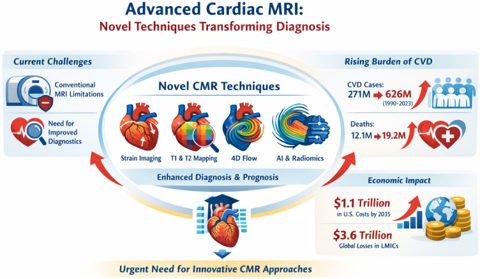
Technical advances expanding clinical cardiac MRI applications

A review highlights recent cardiac MRI advances—higher-resolution imaging, refined parametric mapping, 4D flow, novel gadolinium alternatives, and AI integration—that improve diagnostic accuracy and workflow, though cost and patient tolerance remain challenges.

Reviews in cardiovascular medicine
Musculoskeletal (MSK)Nuclear / MolecularBody / AbdominalGeneralGuidelineTrainee

IMWG Issues Updated Recommendations for Solitary Plasmacytoma Diagnosis and Management

~50% of solitary plasmacytomas progress to symptomatic myeloma within 5 years. Updated International Myeloma Working Group recommendations emphasize advanced imaging to rule out systemic disease; local radiotherapy remains mainstay therapy.

Journal of clinical oncology : official journal of the American Society of Clinical Oncology
GeneralAI / InformaticsNews

The Rad Reporting Platform Is Now an AI Strategy

The foundation beneath radiology reporting now determines how effectively AI is woven into the workflow. PowerScribe One's Smart Impression drafts personalized impressions and freed capacity equal to 1.3 FTEs at St. Luke's University Health Network.

The Imaging Wire
Neuro / Head & NeckEmergencyGeneralEducationTrainee

How low-field portable MRI can help in acute stroke

Portable low-field MRI is emerging as a clinically relevant adjunct for acute stroke when conventional imaging is unavailable or delayed, supporting stroke-type classification, tissue-based triage in wake-up stroke, and serial post-intervention assessment.

Stroke
Neuro / Head & NeckPediatricGeneralAI / InformaticsEducationTrainee

AI in pediatric neuroimaging: current tools, gaps, and future directions

A review maps AI applications in pediatric neuroimaging across quality/safety, fetal, neonatal, hydrocephalus, malformations, tumors, epilepsy, demyelination, stroke, and trauma, while noting that very few FDA-cleared AI tools are pediatric-specific and highlighting the need for…

Pediatric radiology
CardiacGeneralResearch

Stress CMR ischemic burden predicts long-term mortality in LV systolic dysfunction

In 5,977 patients with LVEF <50%, each ischemic segment on stress perfusion CMR independently raised long-term mortality (HR 1.11 per segment, 95% CI 1.06–1.15). Adding ischemia and LGE to clinical factors and LVEF improved risk prediction (NRI 0.217, p<0.001) over 9 years media…

European heart journal. Cardiovascular Imaging
Neuro / Head & NeckAI / InformaticsResearch

AI adapts brain MRI protocols from three sequences, matches radiologists for low-risk scans

In 752 brain MRIs, an AI tool analyzing DWI, T2-FLAIR, and SWI sequences for infarcts, hemorrhage, and mass lesions had 92% sensitivity for infarcts (95% CI 86–96), 75% for hemorrhage, and 71% for mass. Agreement with neuroradiologists on protocol adaptation was moderate (κ=0.47…

Acta radiologica (Stockholm, Sweden : 1987)
Neuro / Head & NeckGuidelineTrainee

French Guidelines on NMOSD: MRI Features and Urgent Attack Management

French guidelines for NMOSD: MRI reveals extensive optic nerve (posterior) and central cord lesions. Diagnose with serum anti-AQP4 antibodies. Treat acute attacks urgently with IV corticosteroids/plasma exchange—don't wait for antibody results.

Revue neurologique
NewerPage 78 of 159Older