Deep Learning Framework Automates Lenke Classification on Multi-View Spine Radiographs
On 76 test cases, the AI framework achieved Cobb angle MAE 2.4°, Lenke curve type accuracy 0.895, and reduced review time from 8.2 to 1.5 min/case.
PSAD remained below 0.11 ng/mL² across all ages in 1037 healthy German men, contrasting with continuously rising PSA. 95th percentile reference: PV 51.39 mL, PSA 2.79 ng/mL, PSAD 0.071 ng/mL².
Noncontrast CT-based unimodal imaging AI detected anterior circulation large vessel occlusion with sensitivity 0.78 (95% credible interval 0.68-0.86) and specificity 0.88, versus expert readers' sensitivity 0.62 and similar specificity; low-certainty retrospective evidence.
SIR Foundation research consensus panel calls for standardized acute DVT intervention endpoints: biologically informed patient selection, anatomic/physiologic metrics, validated severity tools, longitudinal biomarkers, and economic/QoL measures to advance precision and reduce po…
When Prostate MRI Quality Becomes a Diagnostic Biomarker in the AI Era.
A deep learning image quality score correlated with improved prostate MRI diagnostic performance: AI model AUC rose from 0.92 to 0.99 and radiologist accuracy from 77% to 85% for clinically significant prostate cancer detection as image quality increased.
Fracture Detection Algorithm in Real-World Radiology.
Gallium-68 NK224 PET/CT detected PD-L1 heterogeneity in lung cancer: biopsy-plane uptake correlated with PD-L1 score (ρ=0.80); higher uptake predicted immunotherapy response (SUVmax 5.9 vs 1.9, P=.01). Five of 12 PD-L1-negative patients had lesions above cutoff (15 of 68 lesions…
"Targeted" Imaging: The Inevitable Fate of Cancer Therapy.
Pseudoprogression with Bone Erosion.
Refining the Ischemic Core with DSC Perfusion.
International Society for Strategic Studies in Radiology (IS3R) consensus calls for AI to boost radiology workflow efficiency, covering image interpretation, capacity building, data governance, and systemic transformation to align with value-based care.
Selection or Treatment? Interpreting EVT Benefit beyond 24 Hours in Basilar Artery Occlusion.
MRI radiomics predicted eligibility for conservative management in early endometrial cancer: an MLP model had an internal validation AUC of 0.946 (95% CI 0.915–0.973) and external test AUC 0.792 (95% CI 0.571–0.965).
A registration-guided GAN synthesized virtual contrast-enhanced CT from noncontrast CT that improved detection of enlarged hilar/mediastinal lymph nodes: AUC rose from 0.81 to 0.90 and 0.74 to 0.88 (P<.05) for experienced radiologists on an external test set.
In 499 studies on AI in coronary CT angiography, publications peaked at 113 in 2022; China led with 193 articles and machine-learning prediction was a key emergent theme.
Giant Vertical Vein Aneurysm in Functional Single Ventricle.
Diagnostic Value of Elastography, Microvascularity, and Classic US Findings in Evaluating Soft Tissue Tumors.
Across two cohorts of 1206 incidental pure ground-glass nodules smaller than 10 mm, 8.6% grew at center 1. Vessel sign (HR 2.98), bubble lucency (HR 2.39), and family history of lung cancer (HR 2.83) predicted growth; a progressive growth pattern was reproduced at both centers.
Multimodality imaging—chest radiography, contrast-enhanced chest CT, and brain MRI—was performed in an 8-month-old girl with 2 months of worsening respiratory distress, oxygen saturation 83% on room air, pulmonary arterial hypertension, and a new seizure.
IS3R review: global radiology faces workforce shortages and burnout as imaging demand grows. AI's productivity impact mixed. Teleradiology and hybrid work improve access but risk isolation. Declining reimbursement and unreimbursed tasks add strain.
Not All Small Pure Ground-Glass Nodules Behave Alike.
Deep learning using F-18 FDG PET/CT distinguished benign from malignant ovarian tumors: ResNet-18 reached accuracy 0.882 and AUC 0.938; a simpler CNN reached AUC 0.957 and specificity 0.942 in 101 patients. Findings support CNN-based PET classification.
Non-contrast CT-based radiomics model combining clinical factors predicted adverse prognosis after TEVAR for type B aortic dissection (AUC 0.943 training, 0.875 validation).
Siemens posts revenue gains in Q3
DeepHealth lands FDA nod for breast ultrasound AI software
Driving the Bus | RSNA Unscripted with Adam Flanders, MD
A stepwise renal MRI approach teaches Bosniak classification of cystic lesions, differentiation of angiomyolipoma (AML) from renal cell carcinoma (RCC), RCC subtyping, and staging essentials using real cases.
<![CDATA[FDA Clears AI-Powered Breast Ultrasound Software from DeepHealth]]>
JACR: PE triage AI saved 0.83 min per read but yielded negative contribution margin (−10.1%) and −76.6% ROI. A brain bleed tool was financially favorable. Efficiency gains may not cover costs.
Liver Imaging Reporting and Data System (LI-RADS): A Comprehensive Review
FDA cleared DeepHealth's AI for breast ultrasound that automates lesion detection and reporting. Validated with 16 radiologists, it aims to standardize workflows and is now commercially available and eligible for reimbursement.
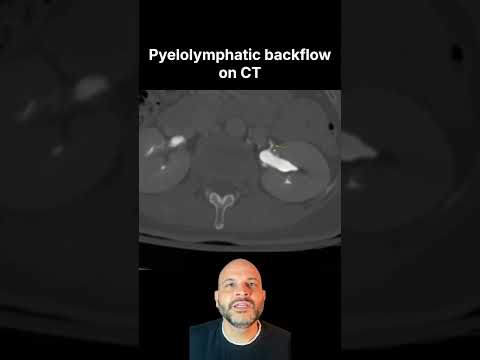
Branching linear contrast extending toward the renal cortex and along hilar lymphatics after forniceal rupture indicates pyelolymphatic backflow, not just urinoma. This subtle sign reflects lymphatic absorption of extravasated contrast.
Budd-Chiari, splenomegaly, and bilateral adrenal infarction on imaging should prompt consideration of a unifying hypercoagulable disorder such as antiphospholipid syndrome.