Deep Learning Framework Automates Lenke Classification on Multi-View Spine Radiographs
On 76 test cases, the AI framework achieved Cobb angle MAE 2.4°, Lenke curve type accuracy 0.895, and reduced review time from 8.2 to 1.5 min/case.
PSAD remained below 0.11 ng/mL² across all ages in 1037 healthy German men, contrasting with continuously rising PSA. 95th percentile reference: PV 51.39 mL, PSA 2.79 ng/mL, PSAD 0.071 ng/mL².
Noncontrast CT-based unimodal imaging AI detected anterior circulation large vessel occlusion with sensitivity 0.78 (95% credible interval 0.68-0.86) and specificity 0.88, versus expert readers' sensitivity 0.62 and similar specificity; low-certainty retrospective evidence.
SIR Foundation research consensus panel calls for standardized acute DVT intervention endpoints: biologically informed patient selection, anatomic/physiologic metrics, validated severity tools, longitudinal biomarkers, and economic/QoL measures to advance precision and reduce po…
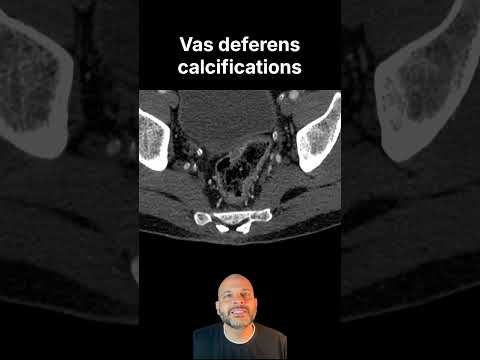
What are the 3 major abnormalities on this CT?
Diffuse bilateral vas deferens calcification on CT is an uncommon but important imaging clue that should raise suspicion for underlying diabetes mellitus, especially in a younger patient.
This portal venous phase CT after a motor vehicle collision shows an unintentional split-bolus appearance from prior contrast in the collecting systems. Inspect the kidneys and collecting systems closely—can you spot the abnormality? The full explanation is coming in the next vi…
MRI Basics: 3D T1 Fat-Suppressed GRE (VIBE/LAVA)
T2-weighted MRI sequences highlight water content, making fluid and edema appear bright. Quickly distinguishing T1 from T2 is a foundational skill for image interpretation.
AI Summaries Help Patients Better Understand Reports
Qureight raised $20M to expand its AI imaging platform for cardiopulmonary trials and will build a 3D deep learning chest imaging lab to create biomarkers for lung fibrosis, asthma, and other diseases.
In a retrospective study of 69 Bethesda IV thyroid nodules, ultrasound radiomics with a Random Forest model achieved an AUC of 0.735 (95% CI 0.513-0.956) on a held-out test set, but wide CIs highlight need for larger validation.
A deep learning model detected acute pancreatitis on abdominal CT with an AUROC of 0.89 (internal) and 0.99 (external) in a retrospective multicenter study of 552 patients. External validation F1 score was 0.92.
A molecular imaging companion to the Kidney Imaging Reporting and Data System (KI-RADS) is proposed, using 99mTc-sestamibi SPECT/CT and 89Zr-girentuximab PET/CT to generate a five-point Likert scale for aggressive histology risk in indeterminate renal masses.
Dynamic retrieval of top-10 similar cases boosted GPT-4o’s ROUGE-1 F1 to 0.44-0.47 (vs 0.35-0.37 zero-shot) and LLaMA’s to 0.37-0.50 (vs 0.25-0.37) on 599 CTPA reports, all p<0.05.
A modified O-RADS model subclassifying Category 4 adnexal masses by >10 locules and color score yielded a low-risk subgroup (4a) with 2.9% malignancy and a high-risk subgroup (4b) with 45.3% malignancy, achieving an AUC of 0.956.
Mixed Reality Fluoroscopy Guidance for Direct Thoracic Duct Cannulation and Pre-Operative Lymphangiography.
For small HCC ≤3 cm treated with stereotactic microwave ablation, minimal ablation margin is a key predictor of local tumor progression: odds ratio 0.68 per mm increase (p<0.001). Lesions with progression had mean margin 2.9 mm vs 4.7 mm without.
MRI radiomics-clinical fusion model predicted radiotherapy response in cervical cancer: random survival forest had AUC 0.863, accuracy 0.920, sensitivity 0.937, specificity 0.833 (internal validation).
A multi-task AI model for diabetic retinopathy grading achieved kappa 0.858 on internal test, 0.821 on external validation, with referable-DR sensitivity 0.928. Cross-task attention was key.
Artificial Intelligence in Clinical Medical Imaging
A cascaded deep learning pipeline that automatically segments and classifies small renal masses on MRI achieved an external-test AUC of 0.788, comparable to a senior radiologist. On the internal test set (AUC 0.936), it significantly outperformed the senior radiologist and junio…
In 91 patients, deep learning reconstruction on MRCP significantly improved image quality and boosted reader diagnostic confidence for intraductal papillary mucinous neoplasm (IPMN) typing, malignancy criteria, and common bile duct (CBD) stone detection.
Siemens Healthineers received FDA 510(k) clearance for its MAGNETOM Flow MRI systems (Flow.Elite, Flow.Neo, Flow.Rise, Flow.Pure).
FDA has granted 510(k) clearance to Radiaction Ltd. for its Shield System designed for use with Siemens 30x40 systems, a radiation protective shield for radiology.
FDA has cleared Esaote's I-Genius diagnostic ultrasound system via the 510(k) pathway for general imaging use.
The FDA has cleared the Affinity PET system (Hermes Medical Solutions) via 510(k) with product code QIH, indicating a positron emission tomography device. Radiology committee reviewed.
The FDA has cleared RadioViewAI, a software device by NeurocareAI, via the 510(k) pathway for automated analysis of brain MRI images.
A narrative review finds lower DTI-ALPS, an MRI marker of glymphatic clearance, is consistently tied to worse memory and global cognition across Alzheimer's, small vessel disease, Parkinson's, and other conditions. Longitudinal data suggests DTI-ALPS decline may precede detectab…
Weighted metric combination predicted radiologist-assigned perfect satisfaction (Likert 5) for DL thigh MRI segmentations with 84.1% accuracy, 100% recall, AUC 0.824, outperforming any single metric.
Transformer-based LPD reconstruction outperforms CNN baseline in PET: Stacked Transformer and Restormer improve MSE and PSNR across noise levels; Restormer yields higher SSIM at low noise. Models trained only on synthetic data generalized to experimental measurements.
Across 31 high-grade serous ovarian cancer studies, a unified multimodal pipeline has five stages: feature extraction, intra-modal aggregation, fusion, inter-modal integration, prediction head. Issues: inconsistent validation, limited reproducibility, weak explainability.
Patients with white matter hyperintensity (WMH) show electroencephalography (EEG) microstate C temporal parameter drops and fewer transitions toward C (P<0.001); machine learning separated WMH with dementia from WMH without dementia with 76.67% accuracy and AUC 0.84.
A deep learning model with FPN-based tooth segmentation achieved 89.28% accuracy for detecting dental caries on intraoral images, outperforming models without segmentation.