Top this week

most clinically relevant
Chest / ThoracicAI / InformaticsGuidelineTrainee

Chinese Medical Association updates lung cancer diagnosis and treatment guideline for 2026

The 2026 Chinese lung cancer guideline adds AI and opportunistic screening in low-dose CT, expands molecular testing, and updates treatment regimens for NSCLC, including perioperative, consolidation immunotherapy, and targeted therapy for EGFR, ALK, KRAS, HER2, and MET alteratio…

Zhonghua zhong liu za zhi [Chinese journal of oncology]

Latest

4715 stories
GeneralNeuro / Head & NeckBody / AbdominalEducationTrainee

Quantitative MRI for precision radiotherapy target delineation

Quantitative MRI metrics such as apparent diffusion coefficient, relaxation times, and perfusion reflect tumor cellularity and hypoxia, enabling biology-guided radiotherapy target delineation; standardization and multicenter validation remain key challenges.

Translational cancer research
GeneralNews

Radiology groups air No Surprises Act grievances to CMS chief of staff

Radiology groups told CMS chief of staff that some insurers propose in-network rates 21% below market, driving costly arbitration. CMS acknowledges enforcement gaps, vows priority action, as appeals court nixes ‘ghost rates’ for qualifying payment amounts.

Radiology Business
BreastNewsTrainee

Cancer yield of mammography for isolated mastalgia is just 0.6%

Mammography for isolated breast pain with normal clinical exam found cancer in 0.6% (6 per 1,000) of 6,670 women—lower than the UK screening rate of 0.7%. Avoiding this low-yield imaging could reduce unnecessary costs and clinic congestion.

Radiology Business
Body / AbdominalNewsTrainee

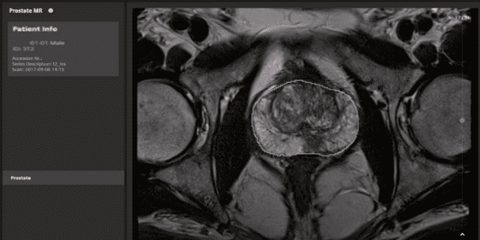
High-Confidence mpMRI May Allow Men to Skip Prostate Biopsy

In 880 men, mpMRI readings with 99% certainty of prostate cancer had 100% clinically significant tumors on biopsy. At 90% certainty, 98% had significant disease. Overall, 14% of patients could potentially skip biopsy and proceed directly to treatment.

The Imaging Wire
Chest / ThoracicAI / InformaticsEducation

AI in interstitial lung disease: from visual HRCT reads to quantitative decision support

AI can enhance HRCT interpretation in interstitial lung disease by detecting subtle abnormalities, classifying patterns, and generating quantitative biomarkers. Multimodal models may refine risk stratification. Prospective validation is needed for clinical translation.

Respiration; international review of thoracic diseases
Body / AbdominalEducationTrainee

PRECISE v2: Structured Lexicon for Serial Prostate MRI in Active Surveillance

PRECISE v2 provides a standardized lexicon for prostate MRI during active surveillance, covering lesion-level and technical descriptors, stable disease, and the non-assessable PRECISE X category. Organizing terms by context of use may improve consistency and reduce ambiguity in…

Abdominal radiology (New York)
Body / AbdominalNuclear / MolecularAI / InformaticsEducationTrainee

Multimodal AI integrating mpMRI with clinical and molecular data in prostate cancer

Combining multiparametric MRI with clinical variables incrementally improves prostate cancer AI model discrimination over MRI alone. Integration with PSMA PET and pathology further aids staging and prognosis. Domain shift and missing-modality robustness remain key barriers to cl…

Abdominal radiology (New York)
Body / AbdominalAI / InformaticsResearch

Integrated CT-MRI deep learning plus clinical features improves preoperative HCC grading

An integrated CT-MRI deep learning model plus clinical features achieved AUCs of 0.89-0.90 for preoperative hepatocellular carcinoma (HCC) grading, significantly outperforming multimodality alone (0.72-0.82) and clinical model (0.59-0.73) in 250 patients across three institution…

Magnetic resonance imaging
Body / AbdominalAI / InformaticsResearch

Radiologic, pathologic, and deep learning markers predict outcomes after post-immune checkpoint blockade nephrectomy in renal cell carcinoma

In 99 renal cell carcinoma (RCC) patients receiving immune checkpoint blockade before nephrectomy, ≥30% radiologic tumor shrinkage (p=0.0036) and greater pathologic regression (HR 0.97, CI 0.95-0.99) predicted longer time to next therapy.

Modern pathology : an official journal of the United States and Canadian Academy of Pathology, Inc
NewerPage 37 of 158Older