GeneralNewsBrief
Integration or Independence: New Models for Organizing Interventional Radiology
Integration or Independence: New Models for Organizing Interventional Radiology
Radiological Society of North Americavia Google News
Integration or Independence: New Models for Organizing Interventional Radiology
Doctor Groups Oppose Bill Giving Insurers Control of OON Payments
Radiology leaders must listen to all voices; early-career physicians should embrace opportunities; and the best AI tools improve workflow while supporting patient care, says Dr. John Lewin.
The ACR, ASA, and ACEP warn a bill to eliminate surprise-billing arbitration would remove a critical safeguard, as data show nearly 40% of insurer offers were at/below benchmark rates, with 8% at $1 or less.
AI solution can help nearly 1 in 5 patients avoid prostate biopsies, RadNet says
ACR Responds to Senate Finance RFI on Healthcare Reform
NIH Promotes New Website, Topic-Based Information Hubs
Adding AI iterative reconstruction (AIIR) to arterial phase multiphase CT improved uterine artery origin identification from 68% to 90%, branching classification from 71% to 89%, and measurable diameters from 33% to 63%, matching dedicated CT angiography.
Pediatric 7T MRI offers higher spatial, contrast, susceptibility, and spectral resolution for neurodevelopmental, epilepsy, demyelinating, vascular, neoplastic, and traumatic disorders; specific absorption rate limits historically restricted use to ≥30 kg.
Letter to the Editor: Interpreting the comparative diagnostic performance of CT Hounsfield units and MRI vertebral bone quality scores.
Letter to the Editor: Virtual non-contrast CT should be validated by non-contrast-dependent clinical tasks before replacing true unenhanced abdominal CT.
In liver transplant candidates, hyperdynamic circulation and blunted vasodilator reserve substantially lower SPECT sensitivity for coronary artery disease vs the general population. Interpret SPECT cautiously; quantitative PET myocardial flow reserve may add prognostic informati…
The Last Apprenticeship What interventional radiology reveals about training in the AI era.
For distinguishing WHO grade III-IV from grade II gliomas, an ITSS threshold ≥2 yielded pooled sensitivity 0.85 (95% CI 0.74-0.91) and specificity 0.93 (0.84-0.97), the most balanced profile.
In a 20-year series of 35 patients with isolated sinus dural AVFs, transarterial embolization achieved immediate occlusion in 74% and transvenous in 80%; 5 (14%) required retreatment, major complications in 7%. No residual fistula at last follow-up.
Vessel wall MRI (VWI) significantly improved CTA discrimination between large-artery atherosclerotic and cardioembolic stroke: AUC 0.57 for CTA alone vs 0.76 with VWI in anterior circulation (p<0.001), and 0.77 vs 0.84 in posterior (p=0.02).
BPD-normalized olfactory sulcus depth, length, and olfactory bulb width showed moderate reproducibility (ICC 0.58–0.69) in 37 patients with septo-optic dysplasia spectrum and were significantly associated with consensus abnormality scores (P < .001–.01).
In 25 patients (35 hemispheres) with chronic subdural hematoma, intra-arterial bevacizumab into the middle meningeal artery led to >50% hematoma resolution in 80% of hemispheres and complete resolution in 25.7% at 90 days, with no rescue surgeries or neurological deterioration.
Peer-review manipulation accounted for 21.1% of retractions in vascular and interventional radiology research, with 64.7% of retractions occurring from 2023–2026 and a median time to retraction of 14.8 months.
Publisher Correction: Sleep chart of biological ageing clocks in middle and late life.
A hands-on imaging informatics module for medical students using photo-sharing exercises taught concepts of image standards, metadata, workflow automation, and interoperability, receiving a mean rating of 4.33/5 for being conducive to learning.
Correction: Grade III Ductal Carcinoma In Situ Arising Within a Long-Standing Fibroadenoma: A Case Report Illustrating the Limits of Shape-Based Breast Imaging Reporting and Data System (BI-RADS) and AI-Assisted Ultrasound Assessment.
A unified framework synthesized multimodal brain MRI with controllability and domain robustness across 991 test subjects, matching baselines without finetuning on unseen domains; a clinician Turing test showed realistic appearance.
FDA cleared Ischemaview's Rapid ICH v4.0, an AI software for detecting intracranial hemorrhage on CT, via the 510(k) pathway.
FDA clears Fujifilm’s ECHELON Synergy MRI system via 510(k). The device is classified as a nuclear magnetic resonance imaging system (product code LNH).
Automated knee MRI segmentation in an open-source pipeline achieved Dice scores of 0.84–0.98 across all tissues. Quantitative PET-MRI biomarkers showed generally high agreement, but confidence intervals were wide for several. Tested on 20 prospective PET-MRI knees.
Advanced Radiology Services Employer Profile
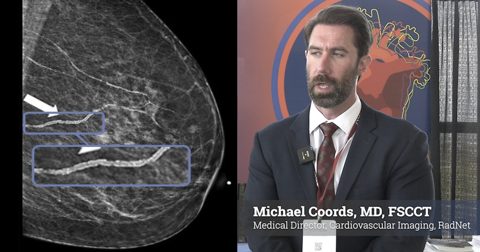
Maryland is first state to require mammography notification of breast arterial calcifications (BAC), opportunistically flagging cardiovascular risk without extra radiation or cost. BAC is linked to cardiovascular disease but not an imminent event.