Deep Learning Framework Automates Lenke Classification on Multi-View Spine Radiographs
On 76 test cases, the AI framework achieved Cobb angle MAE 2.4°, Lenke curve type accuracy 0.895, and reduced review time from 8.2 to 1.5 min/case.
PSAD remained below 0.11 ng/mL² across all ages in 1037 healthy German men, contrasting with continuously rising PSA. 95th percentile reference: PV 51.39 mL, PSA 2.79 ng/mL, PSAD 0.071 ng/mL².
Noncontrast CT-based unimodal imaging AI detected anterior circulation large vessel occlusion with sensitivity 0.78 (95% credible interval 0.68-0.86) and specificity 0.88, versus expert readers' sensitivity 0.62 and similar specificity; low-certainty retrospective evidence.
SIR Foundation research consensus panel calls for standardized acute DVT intervention endpoints: biologically informed patient selection, anatomic/physiologic metrics, validated severity tools, longitudinal biomarkers, and economic/QoL measures to advance precision and reduce po…
In 60 brain tumor patients, a new fluid-suppressed diffusivity map outperformed ADC for visualizing reduced diffusion, and was significantly linked to IDH status.
In pleomorphic xanthoastrocytoma, VASARI MRI features—diffusion restriction (HR 5.10), midline crossing (HR 3.82), mixed cystic-solid morphology (HR 3.42)—predicted recurrence. Optimism-corrected C-index 0.79 (95% CI 0.70–0.86).
After thrombectomy with emergent carotid stenting for tandem lesions, recurrent systolic blood pressure peaks >140 mm Hg independently predicted symptomatic intracranial hemorrhage (sICH) in patients without known hypertension (adjusted OR, 7.45; 95% CI, 1.39-39.79), a multicent…
A combined radiomics and Vision Transformer (ViT) model using CT threshold segmentation predicted visceral pleural invasion in lung adenocarcinoma ≤30 mm with AUCs 0.895 training, 0.852 internal test, 0.823 external test, and the highest sensitivity.
For radiographic knee OA grading, ChatGPT-5.0 outperforms GPT-4o but remains inferior to clinicians. Binary detection sensitivity 0.96 but specificity limited. Not suitable for standalone assessment.
In 6700 stroke patients, direct aspiration first-pass thrombectomy (ADAPT) achieved higher first-pass effect without symptomatic hemorrhage than stent retriever (39.9% vs 26.9%; aOR 2.07). ML identified subgroups with greater benefit: recent years, M1 occlusions, earlier time wi…
O-RADS ultrasound v2022 had AUC 0.935, sensitivity 98.3%, specificity 70.8% for adnexal mass malignancy (threshold ≥ category 4). Performance comparable to v2019 and ADNEX model, with numerically higher specificity and greater reader agreement.
FDA 510(k) clearance for Rivanna Medical's Accuro 3S ultrasound system (product code IYO). The Radiology committee reviewed the device.
U.S. FDA granted 510(k) clearance to Airs Medical, Inc. for SwiftMR, a magnetic resonance imaging (MRI) system (product code QIH).
FDA 510(k) clearance issued to ROPCA ApS for DIANA, a radiological image processing device (product code QIH, Committee: Radiology).
U.S. FDA grants 510(k) clearance to Nucletron B.V. for LumenCare Azure, a brachytherapy treatment planning system (product code JAQ).
FDA cleared the TheraSphere 360 Y-90 Management Platform, a treatment planning system for yttrium-90 radioembolization, from Boston Scientific via 510(k) pathway.
Rivanna Medical obtains FDA 510(k) clearance for the Accuro 3S Needle Guide Kit, classified under product code ITX (Radiology committee).
Correction: Chronic osteomyelitis diagnosis using MRI: optimising radiomics models through multi-level region of interest extensions.
Three cognitive phenotypes—from preserved cognition to global impairment—were identified via unsupervised clustering of neuropsychological features in 79 MS patients, each associated with different degrees of brain atrophy on MRI.
In acute ischemic stroke, XGBoost predicted anterior (ACA), middle (MCA), and posterior (PCA) cerebral artery territorial infarcts on non-contrast CT with AUCs of 0.92, 0.87, and 0.95, respectively (n=118). Mean cross-validated AUC 0.94±0.03.
For multi-center MRI meningioma segmentation, glioma-pretrained federated learning achieved external Dice 0.7503, comparable to centralized training (0.7452) and superior to meningioma-pretrained FL (0.7122; p<0.001).
Interventional radiology offers minimally invasive eye treatments: targeted chemo, embolization, CT-guided biopsies. Optical coherence tomography angiography (OCTA) enhances microvascular imaging. AI, nanotech will improve care, but cost and access remain challenges.
Wellumio nabs $9.75M for portable stroke imaging device
LLM for breast ultrasound report quality control: 80% accuracy for margins (vs 64% manual), 74% for echo patterns (56%), 50 reports in 13 min (vs 213 min), suggesting time-saving automation.
LLMs could automate quality control processes, saving radiology departments significant time
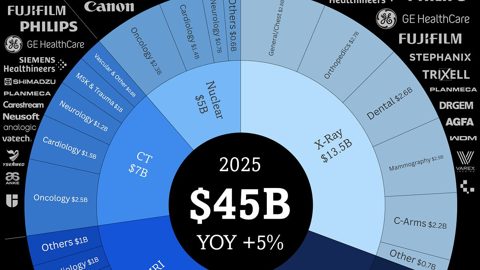
The global medical imaging equipment market was approximately $45 billion in 2025, with X-ray the largest segment at $13.5B, followed by ultrasound ($10.5B), MRI ($8B), CT ($7B), and nuclear imaging ($5B).
Putting Patient Safety at the Center of Radiology Residency
Saint Pete MRI in Florida reports a data breach of scanned files potentially exposing patient names, Social Security numbers, medical and insurance information. Clinical and imaging systems remained secure, and no misuse has been detected.
Rad AI names Leonard Law chief product officer
HOPPR launches foundation model for chest CT
HOPPR unveils a new AI foundation model for chest CT.
<![CDATA[Predicting Microvascular Invasion in HCC: What a New Meta-Analysis Reveals About MRI and Ultrasound]]>
Why Academic Radiologists Need the Practice Leadership Forum