Deep Learning Framework Automates Lenke Classification on Multi-View Spine Radiographs
On 76 test cases, the AI framework achieved Cobb angle MAE 2.4°, Lenke curve type accuracy 0.895, and reduced review time from 8.2 to 1.5 min/case.
PSAD remained below 0.11 ng/mL² across all ages in 1037 healthy German men, contrasting with continuously rising PSA. 95th percentile reference: PV 51.39 mL, PSA 2.79 ng/mL, PSAD 0.071 ng/mL².
Noncontrast CT-based unimodal imaging AI detected anterior circulation large vessel occlusion with sensitivity 0.78 (95% credible interval 0.68-0.86) and specificity 0.88, versus expert readers' sensitivity 0.62 and similar specificity; low-certainty retrospective evidence.
SIR Foundation research consensus panel calls for standardized acute DVT intervention endpoints: biologically informed patient selection, anatomic/physiologic metrics, validated severity tools, longitudinal biomarkers, and economic/QoL measures to advance precision and reduce po…
A curriculum-guided unsupervised domain adaptation framework improved MRI-based Parkinson’s diagnosis across centers, boosting accuracy from 65.81% to 67.95% and AUC from 0.6474 to 0.7148 on a cross-domain task. It mitigates pseudo-label noise.
For ultrasound-based ovarian mass risk stratification, a vision transformer (ViT16-384) achieved AUC 0.941 and accuracy 87.4%, significantly outperforming radiologists using O-RADS v2022 (AUC 0.683, accuracy 68.0%). Hybrid human-AI models further boosted performance.
<![CDATA[Optimizing MRI Workflows: Eleven Takeaways from a New Literature Review]]>
<![CDATA[The ‘Biological Opportunity’ of Decreasing Voxel Size with Cardiac MRI and Photon-Counting CT]]>
Two deep learning models for pulmonary nodule malignancy estimation on CT achieved area under the curve (AUC) values of 0.74 and 0.72 vs 0.63 for Brock (both p<0.01), with higher specificity (60% vs 44%) at fixed sensitivity in a multicentre dataset of 269 incidental nodules.
Correction: Establishing discard criteria for lead aprons using deep learning-based quantification of defect area on X-ray fluoroscopic video.
Beyond nnU-Net: emerging artificial intelligence directions for automated perivascular space segmentation.
Deep learning model estimated bone age from pediatric chest radiographs with intraclass correlation coefficient of 0.87 (95% CI 0.63-0.99) and root mean squared error of 1.30 years (95% CI 0.56-1.95) compared to hand radiograph reference.
A MRI-based sub-regional radiomics model of gluteus maximus muscle/fat sub-regions predicted recurrence in high-grade serous ovarian cancer, achieving AUC 0.774 in validation; adding neoadjuvant chemo and PARP inhibitor status raised AUC to 0.817.
An externally validated deep learning model for pulmonary embolism on CTPA achieved sensitivity 0.80, specificity 0.97, and AUROC 0.94 for any PE. No central PE was missed, but 100/375 peripheral PEs (26.7%) went undetected. Subsegmental-only PE detection was near chance (AUROC…
Deep learning models nnU-Net and MedSAM directly segmented the left ventricular myocardium on native cardiac MRE data, achieving Dice scores of 0.82—matching or exceeding the inter-reader agreement of 0.79—paving the way for a self-contained MRE workflow.
Adding expiratory CT and lobar analysis improved AUC for chronic airflow limitation detection from 0.66 (inspiratory alone) to 0.81, with 79% sensitivity and 94% NPV.
A bibliometric analysis of 1511 whole-body MRI publications found annual output rose from 124 in 2015 to 180 in 2025. Cancer (myeloma, prostate), musculoskeletal disease, diffusion-weighted imaging, and AI segmentation led themes; AI papers grew from 5 to 20.
Synthetic multiphase CT from noncontrast CT, generated by a large language model–guided dual-decoder framework, improved focal liver lesion classification accuracy from 71.65% to 85.04% (acquired CT 91.34%) in 86 patients.
In 159 early rheumatoid arthritis patients, baseline wrist ultrasound inflammation correlated with later AI-derived carpal compactness changes on radiographs (r 0.18–0.25), but compactness did not track Sharp/van der Heijde scores.
The CT 5-star quality rating system supports optimization.
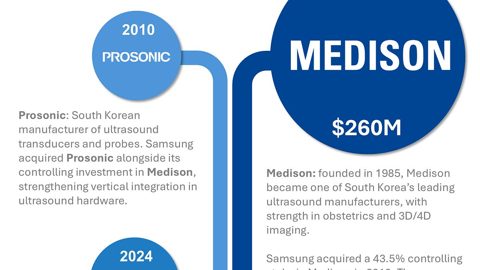
Samsung has reorganized its US ultrasound, digital radiography, and CT divisions—previously Boston Imaging and NeuroLogica—under the new Samsung HME America, streamlining its vertically integrated imaging business that holds a 6% share of the global ultrasound market.
Philips has issued an urgent correction for its Allura interventional fluoroscopy systems due to imaging capture malfunctions, loss of motorized movement, and unauthorized hard drives, affecting nearly 10,000 U.S. units. Manual repositioning workarounds exist; no adverse events…
<![CDATA[Breast Imaging in Focus Series: Recent Episode Highlights]]>
What Radiology Can Learn from Other Fields Using AI
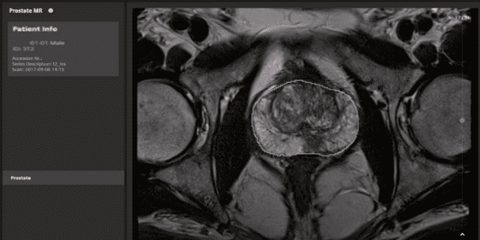
Pre-biopsy MRI is 93% sensitive for prostate cancer vs 50% for systematic biopsy, yet only about one-third of U.S. workups use it. Barriers include urologist training, MRI access, and financial incentives favoring in-office biopsy.
MRI-based models may predict atypical brain development in children
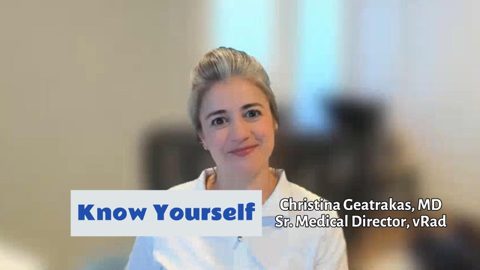
Balance, Leadership, & AI in Teleradiology | RSNA Unscripted with Christina Geatrakas, MD
Ultrasound MinnieCast, Episode 14: Weathering the sonographer shortage
The ACR NRDR Portal is a portal from the ACR.
Editorial for "AI-Assisted Prostate Cancer Diagnosis Using Biparametric MRI and PI-RADS v2.1: Performance Comparison Between Novice-Level and Experienced Readers".
In a study of 422 brain metastasis patients, clinical model best predicted survival (accuracy 0.72). Radiomic MRI model underperformed overall (accuracy 0.52) but outperformed in 54 melanoma patients (accuracy 0.77, 80% low-risk and 67% high-risk correctly classified).