Beyond Accuracy: Translating Ethical Safeguard and AI Education Into Responsible AI Integration in Radiology.
Patient-Friendly Summary of the ACR Appropriateness Criteria®: Suspected Osteomyelitis of the Foot in Patients with Diabetes Mellitus.
Patient-Friendly Summary of the ACR Appropriateness Criteria®: Diagnosis and Monitoring of Sarcopenia.
From the North Pole to Space: AI for Care Beyond the Clinical Frontier.
Only 8.6% of radiology follow-up recommendations were completed as outpatient within the adherence window among incarcerated patients seen in the emergency department or inpatient setting; any follow-up occurred in 33.3%.
In a Canadian registry of 439 stroke patients with low NIHSS (≤5) undergoing endovascular thrombectomy, 11% had early unfavorable outcomes; unsuccessful reperfusion (TICI <2b) was the strongest modifiable factor (adjusted odds ratio 41.52, 95% CI 5.31–324.62).
Sub-torcular venous collaterals were present in 96% of venous sinus stenting procedures for intracranial hypertension. Jugular bulb-origin collaterals (Type 3) showed less post-stent flow reduction than torcular-origin (Type 1) (p=0.02), though quantitative area changes were sim…
Evolution of Renal Trauma Management: When Less is More.
A proof-of-concept cloud-native platform using edge nodes and a zero-footprint viewer enabled automated imaging metadata synchronization and dynamic case assignment, streamlining multicenter radiology research workflows.
Apparent near-perfect AI performance for prostate cancer detection on MRI may stem from study design flaws—spectrum bias, pathway bias, imperfect reference standards—rather than genuine technical progress, a structured appraisal warns.
Quantitative ultrashort echo time (UTE) MRI pore-to-matrix ratio (PMR) increased and matrix index (MI) decreased with aging and osteoporosis. Femoral head PMR differentiated Old Normal from Osteoporosis (5.35 vs 8.10, p<0.05); AUC 0.776 (95% CI 0.584-0.909).
Across 50 radiomics datasets, SMOTE leakage inflated AUC by 0.09 (95% CI 0.07-0.11), quadrupled the Rashomon set, and 79% of the effect was mediated by performance ceiling inflation. Near-optimal pipelines disagreed on 20-30% of patients.
Among 333 persistent subsolid nodules (SSNs) in 241 children and adolescents, 10.5% (35/333) showed interval growth over median 34 months follow-up. Part-solid nodules (PSNs) predicted growth. 95% of 21 resected nodules were early-stage adenocarcinoma. No deaths or metastases.
In 213 NELTON trial lung cancers, pleural attachment on CT associated with adenocarcinoma (odds ratio 6.67, 95% CI 1.20–33.33); larger size (OR 0.92 per mm) and lower/middle lobe location reduced odds. Pattern may aid subtype prediction.
A nnU-Net model for anterior quadratus lumborum block ultrasound segmentation achieved Dice scores of 0.91 for vertebral body and 0.86 for psoas, but only 0.38 for the injection plane (precision 0.45, recall 0.38).
FDA cleared NeuroDR, a radiology device from Deep Reasoning Ai, under the 510(k) pathway; the filing is listed under product code QIH and the radiology committee.
U.S. FDA granted 510(k) clearance to Ligence Heart, a cardiac image processing system from UAB Ligence, classified under product code QIH.
FDA has cleared Vista AI Scan, a radiological image processing system (product code LNH) from Vista AI, Inc., via the 510(k) pathway.
Fully automated CT-based erector spinae muscle fat infiltration (IMAT Index) was associated with lower handgrip strength (ρ=-0.434, p=0.004) in 53 older surgical patients, but was not independently associated with global frailty after adjustment.
In a study of 410 patients, a confidence-based AI model for prostate cancer on biparametric MRI retained 80.8% of predictions at a 0.8 threshold, achieving 94.6% accuracy vs. 90.8% for a senior radiologist, with 99 false-positives and 2 false-negatives.
Innovative Radiomic Approach Enhances Lung Cancer Survival Prediction
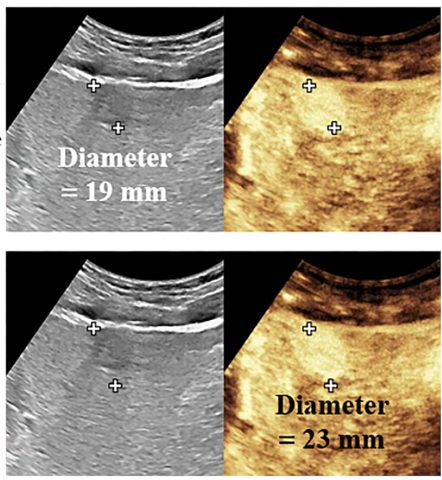
A peritumoral bright marker (PBM) on contrast-enhanced ultrasound—tumor ≥5 mm larger than on gray-scale—more than doubled microvascular invasion (52.2% vs 25%) and raised overall recurrence risk by 76% in HCC patients, supporting wider ablation margins under CEUS guidance.
Podcast: California report reveals MRI safety jurisdiction limits
New ultrasound feature predicts poor prognosis in HCC
RSNA 2026 Technical Exhibits Spotlight Medical Imaging Innovation
Microbot signs Israel distribution deal for Liberty robotic system
Minimally Invasive Technique Offers Lasting Relief for Carpal Tunnel Syndrome
An abnormal mammogram is not a cancer diagnosis: what you should do next