Deep Learning Framework Automates Lenke Classification on Multi-View Spine Radiographs
On 76 test cases, the AI framework achieved Cobb angle MAE 2.4°, Lenke curve type accuracy 0.895, and reduced review time from 8.2 to 1.5 min/case.
PSAD remained below 0.11 ng/mL² across all ages in 1037 healthy German men, contrasting with continuously rising PSA. 95th percentile reference: PV 51.39 mL, PSA 2.79 ng/mL, PSAD 0.071 ng/mL².
Noncontrast CT-based unimodal imaging AI detected anterior circulation large vessel occlusion with sensitivity 0.78 (95% credible interval 0.68-0.86) and specificity 0.88, versus expert readers' sensitivity 0.62 and similar specificity; low-certainty retrospective evidence.
SIR Foundation research consensus panel calls for standardized acute DVT intervention endpoints: biologically informed patient selection, anatomic/physiologic metrics, validated severity tools, longitudinal biomarkers, and economic/QoL measures to advance precision and reduce po…
Artificial Intelligence-Derived CT Fractional Flow Reserve: Implementation Challenges Beyond Accuracy in Resource-Constrained Healthcare Systems.
Number Needed to Test in Diagnostic Comparative Effectiveness Research: Implications for Evaluating the Utility and Value of Artificial Intelligence.
MRI can distinguish proliferative-class hepatocellular carcinoma (HCC), tied to microvascular invasion and poor outcomes, from non-proliferative-class HCC. Features like rim arterial phase hyperenhancement and necrosis signal aggressive disease, while capsule appearance and intr…
A Delphi survey of IR attendings achieved >75% agreement on priority tiers for 21 of 34 common interventional radiology procedures, suggesting timing of high, medium, or low priority. Implementing this triage tool could improve treatment times.
In a study of 261 men, apparent diffusion coefficient (ADC) maps achieved an AUC of 0.996 for distinguishing transition zone prostate cancer from benign prostatic hyperplasia, significantly higher than synthetic MRI T1 (AUC 0.928) and T2 (AUC 0.907) mapping.
A new deep learning model (QQ-F) maps oxygen extraction fraction from a single MRI sequence without protocol-specific retraining, showing significantly higher lesion-to-normal tissue contrast than prior method QQ-NET in dementia patients with different echo time acquisitions.
A deep learning model using chest radiographs (CXR-CKD5) predicted 5-year incident chronic kidney disease (CKD) with an external validation C-index of 0.713 (95% CI 0.697-0.729). Combined with clinical data, C-index reached 0.734. Performance was strongest in non-diabetic patien…
The U.S. FDA has cleared RealGUIDE, a 510(k) software device from 3DIEMME SRL intended for computer-aided design and manufacturing of dental surgical guides.
FDA cleared the Philips Alturion Series diagnostic ultrasound system through the 510(k) pathway (product code IYN, radiology committee).
A single CCTA exam can now provide quantitative plaque analysis, FFR-CT, epicardial fat, pericoronary inflammation, and hepatic steatosis—improving cardiovascular risk stratification. Hepatic steatosis on noncontrast CT for calcium scoring is tied to a 64% increased odds of card…
A bibliometric analysis of 371 publications shows AI research in osteoporosis screening and fracture risk prediction surged from 15 papers in 2019 to 86 in 2025, with four knowledge clusters spanning risk assessment, modeling, guidelines, and machine learning.
MRI and ultrasound biomarkers—cortical R2*, apparent diffusion coefficient (ADC), arterial spin labeling (ASL), and shear-wave elastography (SWE)—predict kidney failure progression independently of eGFR, revealing damage before lab changes.
In a pilot in silico study of five intracranial aneurysms, Contour Neurovascular System deployment reduced simulated intra-aneurysmal velocity by 83.5% pre and 72.4% post intervention; ostium area increased 118.7% and altered hemodynamics.
Scenario-based 3D simulation outperformed traditional teaching for learning internal carotid artery patterns in 120 first-year medical students: overall experience score 4.62 vs 3.50 (p<0.001).
DeepHealth receives FDA 510(k) clearance for AI-driven breast ultrasound automation.
CT-selected thrombectomy shows a 1-year benefit in large-core stroke.
FDA clears GE HealthCare’s Invenia ABUS Prime and StreamVue for automated breast ultrasound supplemental screening in dense breasts. Company says AI-assisted review has 93% sensitivity, 33% faster interpretation, and 40% faster acquisition.
Staffing shortages and a failing HVAC system at the Washington, D.C. VA Medical Center have caused MRI scanner outages and longer turnaround times for exams like amyloid PET scans. Return-to-office mandates prompted radiologists to leave before the VA reversed the policy.
Plus Therapeutics rebrands as Cerenome
Imricor launches cardiac catheterization vertical
GE HealthCare emphasizes new advances in breast ultrasound.
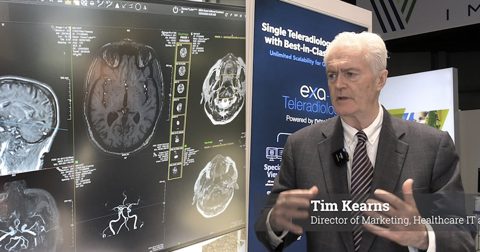
Konica Minolta expands its Exa platform with Exa Teleradiology, combining workflow orchestration, AI-assisted reporting (MD.ai, Radpair), and a unified browser-based reader, offered at a single per-study fee.
Surveillance imaging doesn't improve pancreatic cancer survival
RSNA has launched a new knee MRI AI challenge, the first to use real-world diagnostic radiology reports alongside images, training on over five thousand MRIs from sixteen global sites. Total prizes: seventy-seven thousand dollars.
<![CDATA[When the Clinical History is the Equivalent of a Low Signal-to-Noise Ratio ]]>
Curium to acquire Lantheus in $8 billion deal
RevealDx secures distribution deal, $3.4M investment from 4DMedical
FDA Says Breast Biopsy Needle Shortage Could Last into 2027 as Radiologists Triage Who Gets Scheduled First
This educational resource on CTisus reviews pancreatic conditions that can simulate carcinoma on imaging, aiming to help radiologists avoid diagnostic pitfalls.