Nuclear / MolecularNewsBrief
RayzeBio, Ratio Therapeutics join forces
RayzeBio and Ratio Therapeutics join forces.
AuntMinnievia Google News
RayzeBio and Ratio Therapeutics join forces.
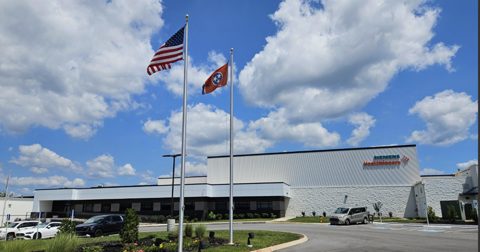
Siemens Healthineers completed a $43.6M expansion of its Rockford, TN, PET detector center, the company’s only worldwide manufacturing site, to increase production capacity and meet growing clinical demand for PET/CT in oncology, theranostics, neurology, and cardiology.
Rubric safeguards patient-friendly AI-generated imaging reports
Siemens expands PET detector manufacturing site
<![CDATA[Can MRI-Guided Reconstruction Improve Assessment of Amyloid Brain PET Scans?]]>
AI model on par with experts in finding femoral-neck fractures
Advocate Health Employer Profile - American College of Radiology Career Center
Mecklenburg Radiology Associates Employer Profile
Colorado Imaging Associates and TRA Medical Imaging form Affiliated Radiology, a physician-led network of nearly 200 radiologists, to share picture archiving and communication systems, AI, and cross-reading capacity across the Pacific Northwest and Rocky Mountain regions.
Allegheny Health Network (AHN) Employer Profile
Increasing tube voltage (kVp) reduces patient dose when detector exposure is held constant. Higher energy photons penetrate better, so mAs can be lowered, reducing total photon output despite each photon carrying more energy.
Marion County Employer Profile
In a retrospective study, contrast-enhanced cone-beam breast CT (CE-CBBCT) features differentiated DCIS from invasive lesions (AUC 0.785 in validation) and DCIS with microinvasion from invasive ductal carcinoma (AUC 0.817). External validation needed.
In children after CDH repair, those requiring ECMO had higher RV/LV ratio and eccentricity index at 2-year MRI, suggesting persistent pulmonary hypertension. These normalized by 10 years. ECMO independently predicted elevated EI (OR 7.68, 95% CI 1.93–30.47).
BI-RADS v2025 formally incorporates nonmass lesions (NMLs) on breast ultrasound, which have a high malignancy rate. A pictorial review classifies NMLs by distribution—segmental, linear, focal, regional—showing benign/malignant cases, descriptors, and multimodality correlation.
Beyond the Score: Turning PI-QUAL Into Practice.
The Importance of Defining "Optimal" When Determining Thresholds.
Turfing TURPs: Should We Use MRI to Triage Incidental Low-Grade Prostate Cancer?
Specimen [18F]FDG PET/CT for Assessing Intraoperative Margins in Early-Stage Breast Cancer: A Promising Emerging Technology.
How Radiologists Can Use These Tips for Reporting ARIA on MRI in Daily Practice.
Predicting 5-Year Breast Cancer Risk From Longitudinal Digital Breast Tomosynthesis: What to Tell Patients.
Is Your Daily Workflow Inviting a Cyberattack?
Pediatric AI in radiology lags behind adult applications due to scarce data, off-label use, and regulatory gaps. An AJR expert panel recommends a roadmap to establish dedicated pediatric AI infrastructure and standards, emphasizing diagnostic accuracy, workflow efficiency, and p…
Myocardial Perfusion Imaging: Point-PET Should Replace SPECT as the Standard of Care.
A rubric to assess artificial intelligence (AI)-generated patient-friendly radiology reports was developed. Lay & radiologist raters (n=3 each) had near-perfect agreement (α=0.87). Reports scored 1 on any attribute (except verbosity) were deemed unsafe.
Myocardial Perfusion Imaging: Counterpoint-SPECT Still Plays an Essential Role, and PET Should Be Used in Select Cases Only.
A deep learning model combining pretreatment mammograms and clinical data predicted breast cancer recurrence with an AUC of 0.80 (95% CI 0.74-0.85) in a single-center cohort of 3923 patients, outperforming unimodal approaches.
VA survey: 95% of primary care clinicians and radiologists preferred lung screening incidental findings be reported in the radiology report, not direct contact. Most primary care clinicians also wanted them on baseline and follow-up exams, despite ACR guidance to report only new…
In a real-world lung cancer screening cohort (n=129), AI computer-aided detection (CADe) had 72% sensitivity for malignant nodules on CT, vs 92% for vessel-suppressed images. CADe sensitivity was 38% for ground-glass and 13% for cystic nodules (P<0.001). Subpleural/paramediastin…
Interpretable Machine Learning for Gallbladder Cancer Risk Assessment: From Predictive Performance to Clinical Utility.