TNM Classification 9th Edition: What Radiologists Should Know
The Radiology Assistant provides a concise overview of the 9th edition TNM classification updates, highlighting staging changes relevant to radiologic reporting across multiple cancers.
Board-prep, core-curriculum, call-prep, and case-of-the-week material.
The Radiology Assistant provides a concise overview of the 9th edition TNM classification updates, highlighting staging changes relevant to radiologic reporting across multiple cancers.
Non-DCE MRI O-RADS score has excellent inter-rater agreement (κ=0.90) and high PPV for adnexal masses; ADCmean of solid (≤1.3×10⁻³ mm²/s) and cystic (>2.07×10⁻³ mm²/s) components perfectly discriminate malignancy (AUC 1.00, 0.95) in a retrospective study.
Asymmetrical basilar-tip fusion was more common in aneurysm patients (69.0%) vs clinical reference cohort (44.4%, P=0.01), but exploratory adjusted analyses attenuated the difference. Asymmetry was associated with higher rates of artery of Percheron and PICA variants.
T1-weighted/T2-weighted ratio mapping in 918 multiple sclerosis patients revealed lower ratios in lesions, normal-appearing white matter, cortical grey matter (p<.001) but higher in thalamus and deep grey matter (p≤.01), linked to disability and cognition.
Retrospective: in pediatric traumatic brain injury, fast MRI detected intracranial injury in all 68 routine-MRI-positive cases, but sensitivity was 75.0% for subarachnoid hemorrhage and 64.5% for parenchymal injury.
FDA issues warning letter to Zoll Medical over safety lapses with its MRI-compatible ventilators, alerting clinicians to potential hazards during scanning. Details of the lapses were not specified in the brief trade report.
The RSNA details the ABR alternate certification pathway, a route for experienced radiologists to become board certified without completing a traditional residency. The article outlines eligibility criteria, the application process, and implications for the radiology workforce.
The American College of Radiology has released a revised standard for interpreting physicians performing breast ultrasound and ultrasound-guided breast biopsy, effective June 2026. The update addresses training and ongoing competence requirements for accredited facilities.
A new educational lecture argues that ‘transient osteoporosis of the hip’ is a misnomer; modern MRI reveals these cases are actually subchondral insufficiency fractures invisible on older scanners.
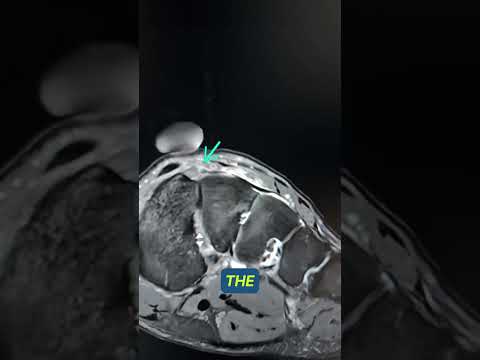
Short-axis MRI reveals a complete tear of the dorsal Lisfranc ligament while the interosseous band is only attenuated — always evaluate all three bands to avoid underestimating injury.
Radiology pearl: Sagittal-only anterior cruciate ligament (ACL) assessment can lead to missed partial tears. Always evaluate the coronal and axial planes to confirm integrity.
This educational video reviews hippocampal MRI anatomy, embryological folding, and imaging features of mesial temporal sclerosis and normal variants to enhance temporal lobe MRI interpretation.
A Radiopaedia 2025 lecture provides a practical framework for prostate MRI. It covers the appearance of the peripheral, transition, and central zones, highlighting that prostate cancer most commonly occurs in the peripheral zone while benign prostatic hyperplasia originates in t…
Benign endometrial polyps appear as focal echogenic round or ovoid lesions on ultrasound, best seen during the proliferative phase when the hypoechoic functional layer enhances contrast. Often sessile or pedunculated, they can cause endometrial thickening and are associated with…
Contrast-enhanced MRI is highly sensitive for detecting perineural and leptomeningeal tumor spread. This video with Dr. Katie Bailey shows key imaging features and differences, using case examples.
Adenomyomatosis is a benign gallbladder wall thickening seen in ~9% of patients, characterized by Rokitansky-Aschoff sinuses (mucosal herniations) appearing as cystic spaces with comet-tail artifact on ultrasound.
The Radiology Assistant provides a comprehensive review of pancreatic cystic lesions, covering imaging features, classification, and management. Essential reading for radiologists interpreting abdominal CT and MRI.
Breast calcifications span benign (skin, vascular) to malignant (DCIS) causes. Morphology, distribution, and stability help narrow the differential and guide biopsy decisions.
Radiology Assistant’s new educational review on developmental dysplasia of the hip covers ultrasound technique, Graf classification, and radiographic signs to help radiologists diagnose DDH accurately.
T2* relaxation is always shorter than T2 because it includes field inhomogeneities; T2 reflects pure spin-spin relaxation. Essential for understanding signal decay and image contrast on MRI.
The Dixon method exploits the chemical shift between fat and water protons to separate their signals, producing four image sets (water-only, fat-only, in-phase, opposed-phase) from a single acquisition.
Radiology Assistant provides a comprehensive imaging tutorial on lumbar disc herniation, covering anatomy, MRI interpretation, and classification.
Radiology Assistant provides a structured overview of CT/MRI features to distinguish common benign and malignant liver masses, focusing on enhancement patterns and key differentiating clues.
SFCE guidelines: anthracycline-related heart failure affects ~10% of pediatric leukemia patients, especially at cumulative doses >300 mg/m² doxorubicin-equivalent. Dexrazoxane now recommended at that threshold. Global longitudinal strain preferred over ejection fraction for subc…
CTA is the go-to first-line test for reversible cerebral vasoconstriction syndrome (RCVS) at 77% of French academic centers, but confirmatory and follow-up strategies vary widely. 85% document reversibility with long-term imaging; authors propose a pragmatic pathway pending pros…
Comprehensive review contrasts radiofrequency ablation outcomes for aldosterone-producing vs cortisol-producing adrenal adenomas. RFA is better characterized for APA; CPA data remain sparse. Key clinical, imaging, and procedural differences are detailed for interventional radiol…
In a meta-analysis of 11,326 patients, intracranial atherosclerotic disease (ICAD) LVO was associated with lower odds of successful reperfusion after endovascular treatment (OR 0.46, 95%CI 0.31–0.70), but functional independence and mortality did not differ from non-ICAD LVO. Sy…
CADRA white paper: AI in radiation medicine must be guided by human judgement, shared standards, and patient priorities, not as an automatic fix. Emphasizes AI literacy in training and patient inclusion in governance.
The June 2026 AJR issue highlights an AI model predicting future breast cancer from normal mammograms, an AI tool showing high accuracy for fracture detection on radiographs, and new data supporting contrast-enhanced ultrasound (CEUS) for characterizing O-RADS indeterminate ovar…
New AJR article proposes an 'intestinal stroke' pathway to standardize and expedite the radiologist's role in diagnosing mesenteric ischemia, emphasizing early CT interpretation and structured reporting.